Thursday, May 19, 2011
LinkedIn IPO soars, but for how long?
Monday, May 9, 2011
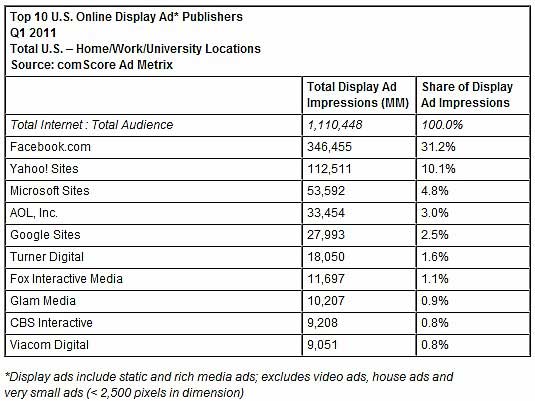
Facebook Kills it in Display Advertising
Tuesday, November 16, 2010
Content and Social Media Marketing Success Secret: Create Your Core Branded Destination
Content marketing and social media marketing are hotter than ever, but with so many tools, tricks, and so-called experts telling you different things you have to be doing to be successful on the social web, you can end up feeling overwhelmed with no idea where to begin or what to do next.
Relax. Take a deep breath and remember that content marketing and social media marketing are exactly what they claim to be -- forms of marketing, and the underlying theories of marketing still apply.
Therefore, your content marketing and social media marketing efforts need to be based in the fundamental principles of marketing theory to be successful over the long-term. Before you create a Twitter account, add yourself to Facebook, or start a blog, you need to set yourself up for content and social media marketing success by understanding the most basic secrets to content marketing success, which are rooted in integrated marketing and cross-promotional theories. The first of those secrets is the importance of creating a core branded online destination.
As you participate in the social web conversation, publish content, and share information, you’ll do so on a wide variety of websites, blogs, social networks, forums, and so on. In order to make those various efforts a valuable part of your content and social media marketing plans, all roads must lead back to what I call your core branded online destination as mentioned in step 9 of my previous article published on ADMAVEN, “10 Tips to Develop a Content and Social Media Marketing Strategy.”
In other words, as you build your online reputation and develop relationships with people online, you should do so with the goal of bringing them back to your core branded online destination where they can get more of your amazing content and you can deepen your relationships with them. Never boldly demand that people come to your core branded online destination. Instead, quietly offer a link to your core branded destination or make a reference to your useful content, so your audience feels in control of your interactions. In time, your most engaged audience will follow you, tell their own connections about you, and share your amazing content, opening the doors for you to engage with even more people!
I always recommend a blog as the core branded online destination because of its flexibility in terms of the type of content you can publish as well as its search friendliness. Even if you don’t own an online business, blogging can help you as your core branded online destination because of one simple thing -- Google.Think of it this way -- if you build a company website with 10 pages, that gives Google 10 entry points to find you, index your content, and deliver your site in keyword search results. Now, imagine that you add a blog to your website and publish a new post every day for a year. That gives you 365 more entry points for Google to index and deliver in search results. Now, imagine that you publish amazing content that people want to share with their own audiences (I call this shareworthy content). They write about your posts on their own blogs, tweet links to your posts, share them on LinkedIn, Facebook, StumbleUpon, Digg, and so on. Suddenly, your original 10 entry points have grown to hundreds or thousands simply because you did two things:
- You connected with your target audience across the social Web and made an effort to bring them back to your core branded online destination.
- You published amazing content that your audience wanted to share and talk about with their own followers.
You’d be crazy to pass up that kind of access to people!
Therefore, the first secret you need to follow in order to put yourself on the path for successful content and social media marketing is to set up your core branded online destination, start publishing amazing content there, and then, work to build relationships across the web and bring people back to your core branded online destination for further interactions, learning, and sharing.Stay tuned for Part 3 of this series where you’ll learn the second biggest secret to getting started on a path to content and social media marketing success -- Surrounding Consumers with Branded Experiences -- coming next week on ADMAVEN.
You can read more about creating a content and social media marketing strategy in Susan Gunelius' new book, 30-Minute Social Media Marketing, which is now available in book stores and online. ADMAVEN readers can follow the link to get a free bonus chapter, which is available for download from McGraw-Hill.
Susan Gunelius spent over a decade directing marketing programs for some of the biggest companies in the world, and today, she is President and CEO of KeySplash Creative, Inc., a marketing communications company. You can follow Susan on the social Web on Twitter (@susangunelius), Facebook, or LinkedIn.
Tuesday, November 2, 2010
10 Tips to Develop a Content and Social Media Marketing Strategy
- Find out what your competitors are doing online. Look for gaps and opportunities.
- Learn where your customers spend time online. Listen to their online conversations and join them to start building relationships with them.
- Define the demographic and behavioral makeup of your best audience. This is your target audience.
- Define your primary social media and content marketing messages and the added value you will bring to the online conversation.
- Determine your 1-year objectives for your content and social media marketing efforts.
- Define your brand promise and your brandís position relative to your competitors in the marketplace so you can differentiate yourself in consumersí minds.
- Develop an honest assessment of the money and time you can invest into content and social media marketing over the next 12-months to determine what you can realistically afford in terms of outside help.
- Find the online influencers who have the ears of your target audience and get on their radar screens by commenting on their blogs, tweeting them, and reaching out to them via social networking and/or email.
- Create a great core branded destination to which all of your content and social media marketing efforts will lead back to. This is where youíll deepen relationships through interaction and providing amazing, shareworthy content that your audience will want to talk about and share with their own audiences thereby extending your exposure across the Web.
- Surround consumers with branded online destinations, so they can self-select how they want to interact with your brand. You can't be everywhere, but itís important to provide alternative ways for people to engage with you (not everyone likes to read blogs or use Twitter). Give your audience more options without spreading yourself too thin. Quality of content and relationships trumps quantity when it comes to building long-term, sustainable, organic growth for both your online presence and your business.
You can read more about creating a content and social media marketing strategy in Susan Gunelius' new book, 30-Minute Social Media Marketing, which is now available in book stores and online. ADMAVEN readers can follow the link to get a free bonus chapter, which is available for download from McGraw-Hill.
Susan Gunelius spent over a decade directing marketing programs for some of the biggest companies in the world, and today, she is President and CEO of KeySplash Creative, Inc., a marketing communications company. You can follow Susan on the social Web on Twitter (@susangunelius), Facebook, or LinkedIn.Thursday, August 26, 2010
Authors That Get Social Media: Marcus Sakey
Marcus Sakey was an award-winning copywriter on brands ranging from JCPenney to World Championship Wrestling until he left the business to write novels. His books have been translated into a dozen languages, labeled “nothing short of brilliant” by the Chicago Tribune, and chosen among Esquire Magazine’s Top 5 of the Year. Recently Marcus has aggressively expanded into eBook formats, publishing a series of short stores available online.About a decade ago, something shifted in the publishing world. What used to be famed as a reclusive profession became a very public one. The novelist was expected to leave his garret and go sell himself.
I’m a novelist, and that’s fine with me. I come from advertising, a world where you fight for your ideas, and promoting my own work comes naturally.
However, what I’ve found interesting over the last few years is the ways in which social networking, the Internet, and lately, the rise of the e-book, have shaped these trends. I’ve written about the first two here before, so it’s the latter I’d like to talk about.
Everyone knows that e-books are the future. You don’t have to like it, but it’s foolish to ignore it. The thing is, right now, that future hasn’t arrived. It’s the Wild West out there. Fortunes were made in the West, but a lot of people died of dysentery, too.
For my money, the people who are hailing the end of publishing are short-sighted. I don’t know exactly how the industry will look, but I sure hope that traditional publishers don’t go away. Art shouldn’t be an entirely democratic process.
No, at this point in history, I view e-books is as a support tool. For example, I just released a bunch of short stories as inexpensive e-books. You can buy them for a buck a pop, or as an anthology of seven called SCAR TISSUE for $2.99.
My goals are simple. I want to offer people a way to try my stuff inexpensively. And I want to reach out to them through media that I can guide, e.g., the Internet. My hope is not that I sell a million copies and retire (although I wouldn’t say no). My real hope is that by taking advantage of a changing marketing landscape, I can reach a potential audience that may not otherwise know of me.
Like you.
To that end, allow me to give you one of my stories, absolutely free. It’s called “The Days When You Were Anything Else,” and it’s one of my personal favorites. It’s available for all e-book formats, or as a PDF you can print out.
I hope you’ll give it a read.
To get the story, just click here, add it to your cart, and use coupon code YB98Q.
Nick Kinports (follow him on Twitter @ADMAVEN) has worked in the interactive technology world for over 15 years, and helps the Fortune 100 identify unmet consumer needs, create ideas to fill those needs, and bring them into market. He currently works at Maddock Douglas.
Monday, August 23, 2010
Killer Social Apps: 5 Trends Shaping the Future of Brand Engagement
Social Dev Camp Chicago 2010 was a great time - if you weren't there I suggest getting on board for next year!In case you missed my panel presentation "Killer Social Apps: 5 Trends Shaping the Future of Brand Engagement" I've included some of the key points below. Special thanks to my fellow panelists Pek Pongpaet (@PekPongpaet) of SpotOn and Chris Pautsch (@ChrisPautsch) of KeyLimeTie.
Game Mechanics
It's no secret that social apps like Foursquare encourage participation and repeat use through an achievement system based on badges. But Foursquare and similar apps represent the beginning of a much larger trend - implementation of social scoring, rating and achievement will proliferate. It's human nature to want to feel a sense of building status and credibility in exchange for loyalty, and apps that satisfy the unmet need will see increased customer loyalty and a lift in repeat visits and use.
Mobility
The concept of mobility may seem obvious, but it's the implementation of the platform where many developers are shifting their thought process. Look for the next generation of mobile apps to be constructed from the ground up independently of preexisting structure. As mobility trends to smartphone adoption with more powerful and feature rich devices expect fewer apps that provide duplicate functionality as website based counterparts. The future of mobility lies in creating game changing applications based on an existing platform or as a first choice to other platforms entirely.
Context and Social Proofing
It's nice to have apps populated with useful information, but the latest trend in content based functions calls on the user's own social networks to create an experience that is both relevant and vetted by friends, followers and even ethereal internet acquaintances.
Activating Brand Advocates
Providing tools to allow sharing through social technologies is old hat. Marketers also know that most users opt out of sharing. Developers must not only provide the tools to share, but ensure the user experience is improved in a meaningful way. The best apps of the future will create much of their own buzz through brand advocates that spread the word as a result of app use.
Real to Virtual and Back Again
When Zynga began promoting their popular Farmville game through real 7-Eleven in store campaign tied to food purchase it set a precedent. Apps that provide a way for users to exchange in app activity for real world benefit and back again help connect and activate consumers - influencing purchase behavior in attractive ways to retailers.
Nick Kinports (follow him on Twitter @ADMAVEN) has worked in the interactive technology world for over 15 years, and helps the Fortune 100 identify unmet consumer needs, create ideas to fill those needs, and bring them into market. He currently works at Maddock Douglas.
Thursday, August 19, 2010
5 Ways Facebook Places Will Change the Marketing Game
Facebook's new Places feature is live, and it's bringing a whole new dimension to the world's most talked about social network.Advertisers, for now, are out of luck. In a live reveal of the technology Mark Zuckerberg, co-founder of Facebook, explained that the technology needs to be perfected (finding friends, checking-in and building stories about places via @benparr) before bringing FourSquare-like deals to the table.
When it happens - and happen it will - what can brands and agencies expect from the new technology? Here's my predictions and trends for location and deal based app marketing:
1) Deep group discounting
Facebook Places let's you check in your friends (unless they disable the feature in privacy settings). Expect brands and venues to begin offering deep discounts for large groups of friends checked in at the same time. Want 20% off your entire meal? Get at least 8 of your friends checked in on Places and reap the rewards!
2) Swarm behavior
Allowing you to see where your friends are every second of the day is a big benefit to Facebook's shiny new toy. I suspect that within 5 years being location aware of your network will be as ubiquitous as having a mobile phone. Until then expect advertisers to take advantage of swarming behavior by offering up to the second and unpublicized deals through Places. Business is down for the day? Seed a 50% off promotion through Facebook Places for the next 60 minutes and watch as the information achieves viral status and causes a swarm to appear in your venue.
3) Competitive cherry-picking
Businesses will need to be on their Places game to avoid losing valuable customers. The businesses that fail to adopt or understand how Facebook places work will become low hanging fruit for tech savvy competitors offering killer deals and discounts.
4) Privacy backlash
When businesses begin harvesting Facebook information about their visitors based on Places it's going to raise some major privacy concerns. The best way to avoid being the scapegoat for yet another Facebook privacy outrage is to play by the common sense rules of marketing in the age of social technology. Only contact people who have selected to receive your communications and bring tangible value to the table with each message. I suspect nightlife and entertainment venues will be among the first to ignite the collective wailing.
5) Social CRM
Social technologies bring a bold new dimension to CRM programs. Ensure yours will be compatible with Facebook Places and that you have built in processes to grab and analyze trends from the geolocation view.
For an overview of Facebook Places including how to use the new features click here.
Nick Kinports (follow him on Twitter @ADMAVEN) has worked in the interactive technology world for over 15 years, and helps the Fortune 100 identify unmet consumer needs, create ideas to fill those needs, and bring them into market. He currently works at Maddock Douglas.
Monday, August 16, 2010
5 Ways to Advance Your Career with Innovation
The familiar refrain "reinvent yourself" has never been more sound for those in search of career advancement today. Fortunately for the CIO, reinvention is a relatively easy thing to do given the innovations IT wields every day. It's a matter of looking at those technologies differently and seeing them as much as a means to promote professional achievement as they are to improve the company's efficiencies and profitability."It has never been easier for CIOs to be viewed as thought leaders in their respective industries and move from positions of relative obscurity to highly desirable," said Nicholas Kinports, Digital Innovation manager at Maddock Douglas, an innovation initiatives firm with a client list that includes 20 percent of the top 100 global brands.
There are as many ways to use technologies to build your visibility, credibility and promotability as there are technologies. But here are five ways to get you started while you think of other creative means to highlight your work and build your personal brand:
Get social - Social media allows you to come out of the data center and face your public. It is the surest way of building your professional brand and name recognition. It is the first step to being publicly recognized for a job well done. "As CIOs move to implement innovative social technologies they should be aware of opportunities to self-invest through social networks, blogs and micro blogs, speaking opportunities and communities," advises Kinports.
One good example of a CIO that has used social media effectively is...
Read the full article on CIO Update
Nick Kinports (follow him on Twitter @ADMAVEN) has worked in the interactive technology world for over 15 years, and helps the Fortune 100 identify unmet consumer needs, create ideas to fill those needs, and bring them into market. He currently works at Maddock Douglas.
Tuesday, August 10, 2010
Game Mechanics Increase Brand Engagement
Or do they?I was recently pitched on Jellyvision - it's an interactive (and pretty engaging) product that helps communicate complex topics. It reminded me of a concept that I've been meaning to address for a while now: game mechanics as a driver for brand engagement. We've all seen the obvious examples in FourSquare, Twitter (number of followers is similar to a score), and now websites that provide badges or achievements for clicking links, commenting and sharing content with your social networks.
Game mechanics make ads and websites more engaging
It may be a Millennial thing, but incorporating achievements or awards - even if they are valueless - in
front of consumers compels them to interact with content more often. Incorporating game mechanics into digital outlets doesn't make sense for everyone, but in the right environment against the right audience it can be the tip of the spear that drives return visits.
Not convinced? Here's another example of the game mechanic in action: Empire Avenue. As if you needed one more social media site to participate in... I like Empire Avenue because it takes the next step of creating a marketplace for social currency where you can buy and sell your friends for virtual currency just like stock markets across the world. On top of that you get the whole badge/achievement thing. Remember my old article on "The Currency of Like"? Here it is in action folks. Oh, and if you want to pick up some shares of me, I'm listed under the ticker symbol NICKK.What do you think? Are sites that build in game mechanics more successful?
Nick Kinports (follow him on Twitter @ADMAVEN) has worked in the interactive technology world for over 9 years, and helps the Fortune 100 identify unmet consumer needs, create ideas to fill those needs, and bring them into market. He currently works at Maddock Douglas.
Thursday, July 29, 2010
The Changing Face of Media Distribution
I've been writing (and ranting) - for over a year now - about my general dissatisfaction with the way media companies are handling their content. It's a big problem for marketers and advertisers who want to tap audiences but can't seem to strike a chord due to poor implementation of technology and experience.We are finally starting to see tangible examples of doing things the right way. I'll highlight two outstanding cases and let you decide if it's all as great as I make it out to be...
Everybody loves Mad Men - it has great writers, a stellar cast and some of the best set design work on television. Too bad it's only on television. But wait! AMC is now delivering Mad Men in streaming HD for free on the web.
What's that video to the right you ask? It's the full show - endorsed by AMC and embeddable on any website or social network. Well done AMC. You aren't afraid to craft outstanding content and let it loose on the web for all to enjoy.
Head over to the official AMC Mad Men page to see additional content and video from new episodes. That actually makes it a worthwhile use of your time - and advertisers get a unique opportunity to connect with an audience that is actually appreciative. The power of embedding allows those same advertisers to leverage a show's popularity to spread throughout the web.
The Yes Men Fix The World has seen it's share of controversy. Thanks to a pending lawsuit over some government impersonation shenanigans, the film has yet to be distributed through traditional channels. That's not a new story - and neither is distribution of questionable content over peer-to-peer networks.What The Yes Men have done to change the game is reward Pirate Bay (a popular Torrent search engine despised by big media companies) users with bonus content available only on select downloads.
At the same time The Yes Men support their future endeavors with requests for financing in the peer-to-peer edition and on their website. So far so good as they have raised well over $10,000 - and all without traditional distribution channels.
These examples may not impress you, and you may wonder if advertisers will really move to take advantage of innovative content producers. You may even wonder if there's a sustainable market for these types of tactics. I'm telling you it's real and it's ready to be tapped today. What do you think about trends in media distribution and advertising? What does the future of media buying look like?
Nick Kinports (follow him on Twitter @ADMAVEN) has worked in the interactive technology world for over 9 years, and helps the Fortune 100 identify unmet consumer needs, create ideas to fill those needs, and bring them into market. He currently works at Maddock Douglas.
Wednesday, June 23, 2010
Do We Need a Social Media Bill of Rights?
I received an outreach email from the authors of Wild West 2.0 detailing their proposed social media bill of rights. Here's the summary followed by my analysis:The Social Media Bill of Rights
By Michael Fertik & David Thompson, Authors of Wild West 2.0: How to Protect and Restore Your Online Reputation on the Untamed Social Frontier
As social networks have grown in importance, ReputationDefender has seen a shocking pattern of privacy violations, ranging from inappropriate data sharing to attempts to trick users into revealing their personal information.
It is time users took back control of their online privacy. ReputationDefender presents this draft Social Media Bill of Rights to provoke thought about how social networking sites -- like Facebook, MySpace, Twitter, and others -- should treat users and protect privacy. We strongly believe that social networking sites should recognize and grant each of these rights to users in an open and transparent way.
Social Media Users Have These Rights
1) The right to privacy.
When in doubt, privacy comes first.
By default, users should not expose information to the world, to data brokers, to corporations, or to anyone else.
Users have the right to share as much or as little as they want. They are in charge of their privacy, and all data sharing comes only after user consent.
2) The right to choose.
Privacy settings must be easy and understandable. If your parents can't use it, then it's not simple enough.
Privacy controls should be easy to find. Social networks should put privacy controls next to where they are needed; near photos, near data collection portals, and other places where users expect to find them.
If taking an action (installing an app, using a new feature, etc) will expose or share data, users deserve to know before they commit. Social networks should explain the privacy cost of each new feature, and let them make an informed choice.
Interfaces should not be evil. Each interface should clearly communicate the privacy consequences of each action. Interfaces that collect or use data in a non-intuitive way should be clearly labeled and explained.
Any kind of external data sharing should be opt-in, not opt-out. If it's so useful, it will be easy to convince users to sign up. Outside corporations don't have a right to user information without clear user consent.
3) The right to data minimization.
Just because a social network can, collect information doesn't mean it should. Social networks should strive to collect no more information about users than what is required to present social functions.
Storing "click stream," "search history," and other data that is not directly tied to social functions is often an invitation to privacy invasions. Storing this data does not directly enhance user experiences and often violates user expectations.
When in doubt, aggregate. Aggregated data often fulfills the same function without the privacy risks.
We don't know the long-term consequences of mass-scale data collection and storage; it is better to err on the side of caution and data minimization.
4) The right to honest communication.
Users have a right to know how their information is being used. Tell them. Use language you'd use with friends, not language used by lawyers. Agreements should be easy to understand and not contain hidden legalese.
If something goes wrong, tell users openly and honestly so that they may protect themselves.
If aggregated data turns out to not be anonymous (like the Netflix Prize data set), tell affected users. Openness today will save headaches tomorrow.
Even if the lawyers can find a legal loophole, users deserve to be treated with respect; social networks should treat users as they expect to be treated, not at the minimum possible legal threshold.
5) The right to delete.
Users have a right to leave social networks. When they do, they should be able to easily take back their data too.
The right to delete includes deleting any marketing information or dossier that has been compiled about them, including any behavioral advertising data.
Exceptions are permitted for financial transactions and other records that must be kept for legal compliance.
6) The right to know.
Users have the right to know:
* how information about them is being collected;
* to whom their data is being sold;
* how their data is secured;
* how many people can see their personal information;
* when there are data security incidents, even if they don't trigger existing notification laws.
Disclosures should be in plain language.
If data is being collected in non-obvious ways (click patterns, through offline sources, etc) then it requires special notice.
7) The right to dignity.
Some information is too personal for social networks to demand or share. Even if it is possible to find out intimate secrets of users' lives, it is usually best to not.
There are limits on the wisdom of behavioral and contextual advertising, even if users have agreed to it. Social networks should think twice before trying to profit from their users' grief, weaknesses, or personal failings.
Social networking engineers should always ask themselves, "would I want my data to be used this way?" If not, don't code it and don't implement it.
Sites should not encourage users to debase, defame, or abuse each other. There is always another person at the other computer; remind users to treat each other with dignity.
8 ) The right to accountability.
Social networking sites should be willing to undergo regular privacy audits to prove they are using data only in approved ways. Sites that don't allow privacy audits should be considered suspect.
Leaders of social sites should accept personal responsibility for the security and privacy practices of their sites. If they make a false promise, they should be held personally accountable.
9) The right to not participate.
Users have the right to not participate in social networking. If they choose not to, social sites should not compile a dossier or file about them, even if friends volunteer that data.
Non-users should be able to find out how personal information about them is being shared or discussed (including "tagged" photos or facially-recognizable photos) without providing further personal information.
10) The right to social privacy.
Social networks should make it easy for users to help friends be respectful of privacy.
Social networks should not encourage users to violate each others' privacy. Interfaces that encourage prying or over-sharing are disfavored.
Social networks should allow users to contact each other about potential privacy violations and privacy requests. A simple "I'd prefer this photo not be online" notification system can help friends communicate their preferences without threatening free expression or creativity.
I generally agree that social networks have shady privacy practices. We've all seen the recent Facebook privacy gaffs (probably the tip of the iceberg). But do consumers really care? Are Millennials, for example, overly concerned how the data they voluntarily upload using social technologies is used by advertisers? Tell me what you think.
Nick Kinports (follow him on Twitter @ADMAVEN) has worked in the interactive technology world for over 9 years, and helps the Fortune 100 identify unmet consumer needs, create ideas to fill those needs, and bring them into market. He currently works at Maddock Douglas.
Monday, May 31, 2010
Should Consumers Be Paid For Using Facebook?
The reports of The House Judiciary Committee's letter to Facebook are, for the most part, unsatisfying. Rep. John Conyers Jr. (D-Mich.), chairman of the House Judiciary Committee, has been quoted as saying, “Companies such as Facebook and Google provide innovative services that enrich and expand the constantly evolving Internet. I want to ensure that privacy concerns are as paramount as creativity to these and all Internet companies, and I look forward to hearing about ways they can ensure this is the case.” Is the temptation to share too great?
The allure of social networking is obvious and indisputable. Sites like Facebook tap into a primal need to communicate, find others like ourselves, and form relationships at a faster pace. It's tribal, and it's human, and in the end we can't really help ourselves.Is our privacy an unfair trade?
Because we can't resist giving up much of our private data to companies like Facebook, we rarely stop to ask ourselves what the value of our personal data really is. It's worth posing the question:Do we really know how much our information is worth?
If the value of our personal data far outweighs the benefits offered by a site like Facebook (from a financial perspective) why aren't we doing more to capitalize on that market - effectively creating a valuation system for our online behaviors. For more on what that might look like, read "Facebook: The Currency of Like". It raises yet another question:Should Facebook be paying users to share their information with advertisers?
In the end, the House Judiciary Committee's letter to Facebook is about fair valuation and compensation for private citizens' data. Though it may be true that people all over the world are voluntarily feeding data to Facebook with the full disclosure in Terms of Service for what may or may not happen to that data, it's also true that most users can't imagine a future where their data is used in a way that becomes undesirable. As Facebook pushes toward bigger profits (and, as I have said many times before, the larger goal of an IPO) there will be a sharp uptick in the number of malcontents.Nick Kinports (follow him on Twitter @ADMAVEN) has worked in the interactive technology world for over 9 years, and helps the Fortune 100 identify unmet consumer needs, create ideas to fill those needs, and bring them into market. He currently works at Maddock Douglas.
Thursday, May 20, 2010
Online Ad Revenue Set to Explode, As Marketers Struggle With Complexity Who Wins?
Facebook, LinkedIn, AdWords, countless networks, and now Twitter. These are just a few of the major online advertising platforms agencies, marketers, and entrepreneurs are budgeting for in 2010 and 2011. According to Nikesh Arora, Google's president of global sales, the budget allocated to online advertising is about to skyrocket.I agree.
In an age where traditional media is in the throes of a long and painful death and more of the world spends time online Mr. Arora's estimates are well taken. He states,
"People are shifting their spending dollars more and more to the online world – whether it be direct marketing, or advertising, or branding. And that follows industrial marketing logic which is that you have to go where the eyeballs are, where the customers are.
The next big wave will be consumers consuming more and more video on the web, and you will see more and more brand advertising and display advertising move to the web."
There's just one problem: Most marketers don't understand online ad technology.
I'll admit - I have a lot to learn, but based on some impromptu research of major North American Brands marketers have a long way to go. Take this statement as an opinion only for now; I'm not prepared to present the hard facts on what's out there.All things considered, here's my prediction of who will cash in and why:
Twitter: the hugely popular microblogging service is about to unleash it's ad platform. I think the concept is simple enough that marketers will flock to the service... at least in the beginning. From a long term viability standpoint I don't see Twitter generating the kind of revenue it needs to be profitable from ad sales. Not to be a pessimist, but I have witnessed the decline of Twitter in the consumer marketplace, and I can't imagine a future where inundating consumers with sponsored Tweets and ads will make the service more palatable.Facebook: the world's most popular social network has visions of becoming bigger still, and in order to accomplish Facebook's goal of going public (trust me - this IS a priority no matter what Facebook is saying publicly) they are going to have to have some serious revenue on the books. Ad sales are going to make up a big part of this, and I think the next big wave on online ad spending will see Facebook cleaning up as it expands it's semantic web approach. The "Like" button, among other widgets and games will increase the importance of Facebook - and it's value to advertisers.
Ad Networks: though Facebook will get a healthy bump in revenue from selling advertising, it will be dwarfed by the increase in sales through ad networks. As semantic, geo, and behavioral targeting become more refined (and more intrusive) expect the immediate benefits to be irresistible to advertisers looking to squeeze more out of an already reduced budget (raise your hand if you had a healthy increase in your marketing budget over the last 2 years... Beuller? Anyone?).
Video Services: YouTube and others will reap big benefits in online ad revenue from a sharp increase in online video viewing.
What other trends are you observing in the online ad space?
Nick Kinports (follow him on Twitter @ADMAVEN) has worked in the interactive technology world for over 9 years, and helps the Fortune 100 identify unmet consumer needs, create ideas to fill those needs, and bring them into market. He currently works at Maddock Douglas.
Wednesday, April 28, 2010
Facebook: The Currency of Like
I like a lot of things in this world. Good food, great friends, funny pictures of cats on the Internet...As the Facebook Product Marketing Team introduces their omnipresent "like us" feature I can't help but wonder if their effort to bolster the semantic web is self defeating.
I'll make this quick, so bear with me.
If everything from presentations to individual images can be "liked" on Facebook, how long will it be before our feeds are polluted with unimportant likes? How long will it be until advertisers to find ways to require "liking" of something in return for value?
Semantics isn't all it's cracked up to be...
The problem is that "liking" something, in it's current form, has little or no value associated with it. When a product or service is recommended by word of mouth, a tangible reason is always attached. I recommend (like) my bank, ING Direct, because I can pick up the phone and talk to a real person with little or no hold time. I like Southwest Airlines because they don't charge me to check my bags. So how does Facebook create meaning where there is none?
The currency of "like"At some point in the near future, I can see Facebook placing a cap on the quantity of things it's users can "like" in a given period. This is necessary to build meaning into an otherwise cacophonous menagerie of content. The next logical step in a for-profit company (we often forget Facebook's primary mission is to make money) will be to allow users to purchase more "liking" ability if they run out. Once this happens we enter a free market system where "likes" can be bought, sold, and traded.
Toss mobility into the mix, and before you know it you'll be paying your dry cleaning bill, gym membership and bar tab in "likes". Let the madness begin.
UPDATE: Check out www.likebutton.me for a conglomeration of all your friends' "likes" categorized and grouped for your consumption. Most of mine weren't of interest, supporting the idea that the semantic web isn't so semantic yet...
Nick Kinports (@ADMAVEN) has worked in the interactive technology world for over 9 years, and helps the Fortune 100 identify unmet consumer needs, create ideas to fill those needs, and bring them into market. He currently works at Maddock Douglas.
Monday, October 19, 2009
Auto-Tune My Voice and Put the Money Right in My Hand: Technorati
In an industry with ever-dwindling sales and unmet consumer needs, major record labels still don’t get it.

It’s a sad state of affairs these days at the Big Four music groups (Sony Music Entertainment, Universal Music Group, EMI, and Warner Music Group). The music industry as a whole has been hurt by the American recession, and there is little doubt consumers are spending less on everything from physical albums and their digital counterparts to merchandise and concert tickets.
But why does an industry suffering from year after year of shrinking sales refuse to innovate?
The answer: major record labels have failed to learn and practice modern marketing skills.
Example: Warner Music Group’s recent attempt to modernize their marketing efforts by selling advertising space before and after music videos.
Really, Warner? That’s the best you could come up with for your so-called "Web Strategy 2.0"?
In an era with social technologies, pull marketing, and word of mouth marketing taking center stage, revenue from physical album sales (the primary revenue stream of the major labels) is plummeting. The desperation amongst industry insiders is palpable as they realize a fundamental business model change is going to have to happen if the major labels are to survive another two to three years.
Labels need to focus on producing a product that their customers view as high quality at a price point that is fair, and then delivering that product to the channels consumers prefer (digital). That may seem like common sense, but it reflects the way the marketing and advertising industries have dramatically restructured to leverage emerging technology and trends in consumer behavior. Returning to the adage of building a high quality digital product with a good story backing it up is essential for anyone working the business to consumer angle in 2009.
As Nancy Jeffries, head of Creative Development and Licensing at MPL Music Publishing recently shared with me, "Great music, undiscovered, filtered and at great prices is what’s called for now."
Digital Rights Management issues aside, unless major labels get their acts together by hiring in fresh, talented marketers - and taking them seriously - we don’t have much to look forward to from Hollywood in the coming years, nor can we expect to have any kind of say in the low brow, Auto-Tuned, airy music dominating Billboard’s top lists.
Interact With ADMAVEN on Twitter
PEOPLE WHO READ THIS ARTICLE ALSO READ:
> As Facebook Grows, Privacy Issues Exposed: Technorati
> FTC Regulates Bloggers: How to Comply
Thursday, August 13, 2009
Marcus Sakey: Social Media Marketing in the New World of Publishing Part 3
Marcus Sakey was an award-winning copywriter on brands ranging from JCPenney to World Championship Wrestling until he left the business to write novels. His books have been translated into a dozen languages, labeled “nothing short of brilliant” by the Chicago Tribune, and chosen among Esquire Magazine’s Top 5 of the Year. His latest, THE AMATEURS, will be released on August 6th. Marcus approached ADMAVEN to tell his story and detail how he uses social media marketing to go above and beyond traditional publisher driven advertising. I found his story compelling, and I am not receiving compensation for allowing Marcus to guest post. With that being said, Marcus will detail his story in three posts that will appear on ADMAVEN weekly.This is the final installment of my guest editorials at ADMAVEN, and I’d like to thank Nick for the opportunity, and all of you for reading—very much appreciated!
Last week I wrote about how even novelists need to build and maintain a brand. Today I’d like to talk about one specific way I did that, taking advantage of social networking.
Twitter is today’s buzz topic, and a lot of agencies and clients are trying to find ways to maximize the value it offers. To my mind, the most important thing is to remember that Twitter was created so that people could keep up with one another, not so they could be marketed to. The worst thing you can do on Twitter is treat your followers like a passive crowd that you talk at—or worse, sell at.
Okay, fine. But what does that mean?
Well, for me it meant that first, I waited to leap to Twitter until I had an idea of what I wanted to say. I didn’t want to just shout about my books. Also—and this is important—I didn’t want to be an early adopter. Unless you’re Ashton Kutcher, the benefit to being first to something like Twitter is outweighed by the cost in time and message. Remember that before Twitter there was Facebook and before Facebook there was MySpace and before MySpace there was Friendster and before Friendster there was AIM and before AIM…you get the picture.
The next thing you want to do is maintain a direct connection. That means replying to people. It means re-tweeting interesting posts. It means shooting thank you messages to people who follow you. It means spending some time being a real live person.
Beyond general interaction, I wanted to do something that would A) increase the number of people subscribing to my posts, and B) promote my new novel to a large group, while C) not being annoying.
All of which added up to a contest. A carefully planned contest.
My new novel, THE AMATEURS, is about four friends in their early thirties who are dissatisfied with their lives, and who make a risky plan to try to take what they think they deserve. Along the way, the meet every week or so to chat and drink and play games, one of which is called “Ready, Go.” It’s essentially a question game:
“If your best friend killed someone, how far would you go to help them cover it up? Ready, go.”
So for my contest, I decided to host a two-week round of Ready, Go. Every day I would tweet a question. To enter, all you had to do was re-tweet your answer, and tag it with @MarcusSakey and #TheAmateurs. Every answer counted as an entry. My publisher, Dutton, generously provided a prize package, about $1000 in hardcover books (A significant prize is important—small prizes feel small, and no brand wants that).
The idea was simple. At this point, being relatively new to Twitter, I didn’t have a huge network. But this contest took advantage of the networks of everyone who entered. Every time someone responded with:
“I’d help bury the body. @MarcusSakey #TheAmateurs”
it flashed out to their entire network. Thus my name, and the title of my new book, appeared on thousands of screens everyday for two weeks. Not only that, but because the questions led to intriguing answers, a lot of people in those networks checked out what had prompted the reply—and ended up subscribing to my posts.
Of course, at the heart of this is that personal connection. This wouldn’t have worked if it wasn’t a real person putting it together, maintaining it, responding to some of the juicier answers—in other words, interacting. Which is what social networking is all about.
Anyway, I’d like to thank ADMAVEN again for the opportunity. If you liked what I had to say—or if you hated it—please let me know on Twitter or Facebook.
Better yet, if you like to read, check out my new book, THE AMATEURS. I think you’ll like it.
Cheers!
-Marcus Sakey
Interact With ADMAVEN on Twitter
PEOPLE WHO READ THIS ARTICLE ALSO READ:
> Controlling Google Search Results Essential For Job Seekers
> Chicago Media Marketing & Advertising August Meetup Conclusion and Pictures
Wednesday, August 12, 2009
Controlling Google Search Results Essential For Job Seekers
In a world where recruiters are increasingly relying on social media to vet candidates early in the selection process it is critical that a job seeker understand and apply principles of branding to his or her life. This morning I received an email from a friend seeking help:"My friend is [name removed] and he has a slight problem. He was involved in a negative situation in his past job and is now clear of the incident with one exception: if you Google his name you will find several undesirable results which he is very adamant about removing or lowering in rank. Can you think of a way to help him with this issue?"
A common problem among modern job seekers are inconsistencies between information easily accessible to recruiters on search engines, social networks, and other social media outlets and their resume or in-person presentation.
The best way to take control of your personal brand and publicly available information is to generate consistent content making use of your name in outlets that matter to your industry. This takes time and daily effort; there is no quick fix. Outlets with particularly high PageRank - the system by which Google categorizes relevancy and importance in search results - are LinkedIn, Google Profiles, Facebook, Twitter, Plaxo, Meetup, and BlogCatalog. Use these sites to create consistent profiles and begin taking search ownership of your name.
Generating relevant content such as blog posts, leaving comments on industry publications, and regularly updating social network profiles will help maintain and increase the search ranking of desirable content.
The lesson to be learned and applied to brands is simple: do not wait until you have an immediate need to understand your online perception. Regardless of whether you represent yourself (personal brand) or a client's brand, you must create consistency in visibility between experience offline and information seekers online.
Interact With ADMAVEN on Twitter
PEOPLE WHO READ THIS ARTICLE ALSO READ:
> Chicago Media Marketing & Advertising August Meetup Conclusion and Pictures
> Chicago Tonight Hosts ADMAVEN on Social Media in the Job Hunt
> Chicago Media Marketing & Advertising August Meetup at Saper Law
Thursday, August 6, 2009
Chicago Tonight Hosts ADMAVEN on Social Media in the Job Hunt
For more on this subject, read the following articles from ADMAVEN:Controlling Google Search Results Essential For Job Seekers
Personal Branding Wars: Does Your Company Already Claim a Stake in Your Personal Twitter, Facebook, or Blog?
Facebook Forces Millions To Consider Personal Branding
Chicago Recruiter Roundup - Land That Next Big Ad Agency Job
YPC Blog: The Importance of Differentiation
YPC Blog: The Importance of Differentiation Part 2: Master Your Offline Brand
Interact With ADMAVEN on Twitter
PEOPLE WHO READ THIS ARTICLE ALSO READ:
> Chicago Media Marketing & Advertising August Meetup at Saper Law
> Marcus Sakey: Social Media Marketing in the New World of Publishing
Marcus Sakey: Social Media Marketing in the New World of Publishing Part 2
Last week I talked a little about where I came from—First Turner Broadcasting, then a design company of a dozen people, finally freelancing for companies like DDB and Leo Burnett—and how I got from there to here, working as a professional novelist. One of the things I learned is that while the game has changed, the rules remain the same—the point is to reach as many people as effectively as possible.
A lot of people have an idea of novelists as reclusive, hiding in their garrets and typing away in the midnight hours. And some are like that. But I believe that careful management of your brand, even as an author, can measurably expand success.
There are a lot of ways to build a brand in my business. Some of them are traditional—touring, speaking events, teaching, attending conferences, running traditional ads. And all have their advantages. But these days, the real benefits are in new media, the web, and social networking.
The reasons are the same for me as they for a shoe company. For the first time since we lived in villages, there’s the opportunity for producer and consumer to meet directly. Not only that, but it’s cheaper and effective.
What does that mean for me? Well, first a website. And not just a sales piece, but something honestly beneficial to a visitor. All the flashy graphics in the world pale in comparison to answering someone’s question, helping them with a project of their own, or simply giving them a personal vision of your brand.
In this case, my brand is me. And I craft a brand message with some care. I’m shooting to give people the impression of what I hope my books feel like—compelling, intense, with both high stakes and complicated moral issues. I’m also trying to let them know that I’m a real person, that when they buy one of my books, they’re inviting me to tell them a tale, and that I don’t take that lightly. And a good part of that comes from accessibility.
So I have a Facebook page, of course. I also have a mailing list, and whenever I send one out—which I do with calculated infrequency—I give something away. I blog. I maintain my own website. Every year, I host a release party for my new book. This year’s is in Chicago, on August 6th from 7 – 10pm at Sheffield’s (3258 N. Sheffield). Come by and let me buy you a beer.
These things make sense for an author. But I think they also make sense for a brand. Want an example? When I turned 18, Gillette mailed me a razor, a Sensor. I’m now 35, and I still shave with it. Convenience? Sure. But also, they reached out to me. They made me feel a personal connection. They tied themselves into my life. And it paid out, for 17 years and counting.
Next week, my last with ADMAVEN—and thanks again for having me!—I’ll talk about how I’ve been using social networking to reach out to fans in a way that’s a little different.
Meanwhile, if you’re in Chicago, come by my release party! I’d love to chat.
Interact With ADMAVEN on Twitter
PEOPLE WHO READ THIS ARTICLE ALSO READ:
> Chicago Media Marketing & Advertising August Meetup at Saper Law
> Marcus Sakey: Social Media Marketing in the New World of Publishing
Thursday, July 30, 2009
Marcus Sakey: Social Media Marketing in the New World of Publishing
Marcus Sakey was an award-winning copywriter on brands ranging from JCPenney to World Championship Wrestling until he left the business to write novels. His books have been translated into a dozen languages, labeled “nothing short of brilliant” by the Chicago Tribune, and chosen among Esquire Magazine’s Top 5 of the Year. His latest, THE AMATEURS, will be released on August 6th. Marcus approached ADMAVEN to tell his story and detail how he uses social media marketing to go above and beyond traditional publisher driven advertising. I found his story compelling, and I am not receiving compensation for allowing Marcus to guest post. With that being said, Marcus will detail his story in three posts that will appear on ADMAVEN weekly.First off, I’d like to thank ADMAVEN for having me—it’s an honor and a privilege.
I worked in television, design, and advertising for about ten years, and by the end, I was starting to feel like Milton from Office Space, the character who walks around mumbling, “I…I…I could set the building on fire.”
Not that I didn’t love the work. I did. I loved the energy and the creativity and the people and especially those moments when a good idea became a great campaign. But for years I had been putting off something that tempts most advertising folks. I call them “sock-drawer dreams,” the idea being that most of us have a screenplay or a series of paintings or an album rotting away in our metaphorical sock drawer.
And so finally, my wife and I split a bottle of wine, talked through the options, and decided now was as good a time as any. So the next morning I went in to work intent on quitting my job.
True story: I was laid off before I could get a word in edgewise. Karma has a sense of humor.
But it worked nicely. I took my severance package, rolled up my sleeves, and started work. About 18 months later, I had a two-book deal. I’ve been incredibly fortunate since, landing a four-book deal for my next contract, and seeing my novels optioned for film by Ben Affleck and Tobey Maguire. While there are things I miss about the business, I love my new career.
But as it turned out, I wasn’t switching professions nearly as much as I expected.
There’s a lot of talk these days about how every brand needs to be accessible. In a decade we’ve seen multinational corporations try to get up close and personal; seen websites grow from a curiosity to a necessity; seen newspapers languish while Twitter explodes. And while nobody has every detail worked out, one thing that is stunningly clear is that a new way of thinking is required. Nobody can hide in their garret these days. Not even authors.
My “products” are my novels. They’re the most important part of the equation, and nothing can replace that. Whether you’re selling paperbacks or Pampers or politicians, the best place to start is with a good product.
But a good product still needs to be sold. Which means there’s a brand to build. Next week I’ll talk a little about the ways I’ve built, and continue to build, my own. From signings to blogging to social networking to Twitter contests, while you can take the guy out of advertising, you can’t take—well, you know the rest.
Read ADMAVEN next week for the second of three posts in Marcus Sakey's series on social media from an author's perspective.
Interact With ADMAVEN on Twitter
PEOPLE WHO READ THIS ARTICLE ALSO READ:
> Tweetsuits Multiply: Suing People For Tweets Going Mainstream
> Twitter 101: A Special Guide