Tuesday, January 19, 2010

Maddock Douglas Acquires Change Inc.

Things are looking green around Maddock Douglas—and for good reason.

Maddock Douglas Acquires Change Inc banner

We recently signed a letter of intent to purchase Change, a Vancouver based consultancy focused on creating and branding green products and services. And with the closing date set for February 1, 2010, we’re ready to start innovating greener.

Check out the official press release on MaddockDouglas.com

“Why” might seem like a no-brainer, but the environment isn’t the only reason to be eco-friendly. Green is good for the consumer and our planet, true, but sustainability is now the key driver of innovation and, believe it or not, it’s also the ultimate competitive advantage.

And what exactly do we mean by that? Here’s why sustainability is more than planet-friendly:

CONTINUE READING

Wednesday, January 13, 2010

Social Media In 2010So far, 2010 has been the year of the tablet, the Blu-Ray, the e-reader, and 3D entertainment. These ideas represent fine consumer product innovations, but let's take a moment and talk about business models. The next year will see a host of changes for many large companies. One of the most interesting (and something we have had our eye on for years) is the integration of social technologies into large, and often siloed, organizations.


If you’re thinking, “wait a minute, I thought that was 2009,” think again. 2009 was indeed social media’s first year in the mainstream corporate consciousness, but for many, adoption has been slow and support has been the same.


Here's what you have to look forward to in 2010:

1) Social media won’t just be social media. That is, Social media in 2010 will no longer be a stand-alone feature. Instead of being the add-on garage, many innovative services and products will have social technologies built into business strategy. Social media will be used, not as a novelty, or an experiment, but as a strategic and integrated piece of a business unit. If we had it our way, the term "social media" would dissapear and simply be understood as a core operating principal of any successful organization.


2) Conversation will king technology.
Instead of focusing on spreading presence across mediums, (whether it be Twitter, Facebook or Linkedin) companies will begin to hone in on the most important part—the conversation. More in-depth efforts will be made to forge relationships, not small talk. Insights will be gathered with more efficiency and passed up the chain with more regularity.


3) Long-term will lead.
Throwing out tweets into the vast social media landscape with the hope that someone re-tweets or responds will be a thing of the past as marketers become better at crafting sticky messages. More in-depth (and ultimately fulfilling) interactions for the brand and the consumer will be far more regular than one-offs.


4) People will bolster relationships—not bots.
The companies that have the right strategy and implementation in place will, if they haven’t already, begin to interact with people as people—not bots, not nameless suits—people. In turn, company-consumer trust levels will increase.


5) Crowdsourcing will come with the territory.
People that are fans of products and services will help to police themselves—and companies will be more willing to allow the communities they are building to grow organically, ultimately facilitating consumer to corporate as well as consumer to consumer conversations with less interference.


Are your public relations professionals, marketing managers, agencies, and account teams still talking about social media one-offs? The most successful companies in 2010 will employ people who understand that social technologies have become a required practice and embrace these concepts as part of the job.


Have you seen the new Maddock Douglas homepage?


Follow Maddock Douglas on Twitter


Friday, January 8, 2010

YEO and ACE Founder Verne Harnish Talks Going Global and Getting Lean

Is your company ready to face huge opportunity? Verne Harnish, founder of the Young Entrepreneurs’ Organization (YEO), the Association of Collegiate Entrepreneurs (ACE) and founder and CEO of Gazelles, Inc. explains why productivity is key to going global and getting lean—and how it will change the game for good.


Verne Harnish - Go Global Get Lean from Maddock Douglas, Inc. on Vimeo.


Verne is a member of the Maddock Douglas Global Expert Network, an exclusive group of thinkers that includes entrepreneurs, professionals and specialists. GEN members span the globe and are hand picked to provide insight and expertise for specific opportunities and challenges. These experts often come from a parallel industry or have a specialized skill that relates to the challenge at hand. And this cross-section of thinking creates relevant, and frequently groundbreaking, ideas. Do you have a GEN? And if not, how do you plan to infuse outside expertise into your next big challenge?


Have you seen the new Maddock Douglas Homepage?


Follow Maddock Douglas on Twitter

Wednesday, January 6, 2010

Why Victims Can't Invent Anything - BusinessWeek

First, get past the fear of failure and unknown markets. Then stop complaining and blaze your own trail to innovation and profit

Consider this tale: Two salespeople for a leading athletic shoe company are sent over to a developing-world soon-to-be superpower country in the early 1980s. After a week of working to find leads, each salesperson reports back to corporate.


The first salesperson says, "Prospects could not be worse. Nobody wears athletic shoes over here."


The second salesperson sees things differently. "This is unbelievable! Everybody here needs our shoes!"


Question: Which report would have come back from you?


The answer is a simple way to determine whether you have what it takes to be a successful innovator. You are either a creator ("What an amazing opportunity—everyone needs what we have; we just need to figure out how to reach them") or a victim ("What a terrible situation").

Now you're probably thinking you are almost always a creator—never, or rarely, a victim. Well, here's how you know you are a victim: You complain about anything. That's right, the sure sign you are playing victim is complaining.

Here's why this should matter to you: In the world of innovation, there are only two kinds of people, victims and creators. Creators focus on finding solutions, welcoming the bumps along the way because they know overcoming hurdles will ultimately lead to a better solution. (More on that in a minute.)


Meanwhile, for victims, small problems—not to mention the inevitable big ones—lead to an unlikely addiction that keeps great ideas from happening.

Victims are Excuse Addicts

Perhaps you have uttered some of these words: The budget is too small; the deadline is too tight; the competition is too tough; my boss is a tool; my boss is an ignorant tool; legal won't approve it; R&D won't make it in time; my team is too small; we don't have any big ideas; we have too many ideas. Any of these sound familiar? Of course they do, because everyone developing new products and services has the same challenges. So why are your competitors—down the street and down the hall—besting you when it comes to new product development?
Put simply, they have learned failure is a positive part of being a creator and complaining is just the drug of choice for the victim. (And we want to acknowledge that The Power of TED, a book by David Emerald, got us to start calling these people victims.)
Failure is the Oxygen of Innovation


We are not being overly dramatic here. Failing is as much a part of creating as heavy breathing is a part of running. The trick is to understand that the creator sees every small failure as a big opportunity to modify the product or experience. They view every problem as an opportunity to come up with some creative workaround. For example:

• "R&D can't make it? I'll try to open innovation models and see if someone else can develop for us."
• "Budget is too small? I'll have online thought leaders expose it to their followers (for free) and take advantage of the viral lift."
• "This approach has never worked in the past? Well, gee. Maybe times have changed—and if they haven't, let's try a different way of attacking the problem."

Creators see the obstacles as springboards for new thinking, not as an excuse to throw up their hands and give up.


What is the Outcome You Want?

Okay, fine, you say. But what do you do if you have a victim mentality—if only once in a while—or manage people who do? Our suggestion is to ask this simple question when you (or the folks you are in charge of) confront an obstacle that makes you think about quitting: "What is the outcome you want?"


This simple question can magically turn a victim into a creator. This phrase is the beacon that allows you to navigate through political, budgetary, and scheduling waters.


Once you are clear on the destination, it becomes a lot easier to steer a course around obstacles and shoals.


If you manage a person who is constantly pointing to excuses when asked why the pipeline is slow or low, ask, "What's the outcome you want?" If that person can't create ideas to get there, he or she might just be too addicted to victimhood to innovate. And if you as a boss find yourself doing more complaining than creating, perhaps it's time to ask yourself the same question—and do something about it.

This article originally published in BusinessWeek

Have you seen the new Maddock Douglas Homepage?

Follow Maddock Douglas on Twitter

Thursday, December 31, 2009

2010 Predictions - Conscious Capitalism and Vertical Learning

Making predictions is no easy business. Take this, for example:

“There is no reason anyone would want a computer in their home.”

— Ken Olson, president, chairman and founder of Digital Equipment Corp. (DEC), maker of mainframe computers, arguing against the PC in 1977.

But, with accurate insights and reflection and analysis of those insights, we can begin to develop a sense of what the future might hold. For 2010, many are predicting change to occur in technology, pop culture and personal life. For beyond—into the next decade, here’s what we think is next for business models, products and services:

The integration of Conscious Capitalism will spur long-term growth.

Conscious capitalism is a new way of thinking about "social responsibility," the idea that an organization (government, nonprofit, business) has an obligation to act not only in its own best interests but also in those of all its stakeholders (customers, employees, suppliers, investors, society).

In the developing consumer driven market, companies will no longer be responsible to only their investors—not if they want sustainable profit, anyway. Instead, companies will either adopt Conscious Capitalism or be forced to once they realize that doing good allows businesses to do beyond well.

And the proponents of this change? First of all, they will be people like John Mackey, CEO of Whole Foods. Along with John Mackey, many CEOs in parallel industries have already begun implementing the integration of Conscious Capitalism.

Secondly, but more importantly, the consumers will drive this change. With the power to choose products and services created by companies who no longer see business as a machine driven by profit only, consumers will exercise this measure of control to empower companies that not only empower them, but also facilitate change for the world.

Vertical learning will be of increasingly high value.

Vertical learning is the pursuit of knowledge of our own assumptions, ways of interpreting experience and our beliefs. But, it has been long overlooked and placed secondary to Horizontal Learning—knowledge acquired through training, education and work experience—expanding our skill sets, in short.

Horizontal Learning is, of course, absolutely necessary. For instance, those who want to design products must learn the proper techniques and acquire the necessary technological information to do so. But Vertical Learning is seen as a lesser skill—introspection is not currently viewed to be equally valuable.

However, with the two working in tandem, we are less likely to think about business models, products and services in binary terms. Instead, we are encouraged to “think through” and think around the obvious obstacles to innovation and renovation—therefore building something of far higher worth.

If we take both into account, we can better see developing trends with objectivity in relation to each other and discern the implications of those relationships as opposed to seeing the individual issues and tasks involved in innovation.

Although making predictions can be tricky, there’s nothing outrageous about these and many other future trends we see developing. After all, businesses alike consumers are ready for positive change in the world—aren’t we all?

Have you seen the new Maddock Douglas homepage?

Follow Maddock Douglas on Twitter

Tuesday, December 29, 2009

Future Trends: Crowdsourcing Municipal Maintenance

Let’s say you’re driving home from work when all of a sudden your front left tire drops into a massive pothole causing you to swerve right. Luckily, there are no cars in the right lane, but regardless you’ve narrowly avoided an accident, and with good reason, you’re upset.


So what?

Well, a few years ago, you might have complained to your friend in the passenger seat and just kept on driving. But now, people have the power to report local issues with the click of a few buttons and the power of GPS.

City residents can now use an app like SeeClickFix, a mobile application that allows its users to take a photo of a pothole, a burnt out street light, fresh graffiti—basically anything that needs to be fixed by the local government—and report it using a mobile GPS device. Along with a photo and GPS location, users can add notes and track progress, as well as receive and view alerts on nearby city issues. Then, users can see how many other people have reported the same issue and monitor the most reported, a.k.a “hot issues” in the selected city.


Just one app out of the many that have been dubbed “Gov 2.0” by the tech community, SeeClickFix is utilizing GPS location in an attempt to make local government more efficient and responsive—and the app supports a trend that we’ve watched develop over the last decade called “Track Me, Help Me.”

The “Track Me, Help Me” trend was sparked by recognition of not only the popularity and functionality of GPS navigational systems on-board mobile devices, but also by the recognition of consumer willingness to offer up a very valuable piece of the puzzle:

Location, location, location.

Many people with smart phones have come to depend on apps like Google Maps, but now, as demonstrated by apps like SeeClickFix, people are ready to take location to the next level. Whether it be the power to innovate local government operations or the pleasure of playing virtual put-put, consumers are receiving relevant benefits when they give this information away—more evidence of not only “Track Me, Help Me,” but also of the evolving consumer-driven market.

But the GPS centric apps currently available are just the tip of the ice burg. As app developers begin working in tighter conjunction with the government, corporations and organizations, GPS innovation will be streamlined and even more integrated into our daily lives. In fact, many industries have just now recognized this trend and are developing applications to catch up to this unmet consumer need, meaning that even more people will be saying “Track Me, Help Me” while being enabled to accomplish tasks—no matter how big—with efficiency.

Have you seen the new Maddock Douglas homepage?

Follow Maddock Douglas on Twitter

Monday, December 28, 2009

Why Companies Lack Successful Innovation - BusinessWeek

A shortage of innovation isn't always senior management's fault. Marketers deserve some blame for not having the right processes in place

It is easy to blame chief executives and senior management for not devoting enough attention to introducing new products, but that is too simplistic an explanation for why radically new products are so rare. Marketers deserve some of the blame for at least three reasons:

Successful strategic innovations need more than a great idea.

There's no shortage of new product concepts. We are willing to bet you could come up with a handful of intriguing ones before lunch if you set your mind to it.

But new ideas by themselves are worthless. You need to move from idea to execution, and that is where the majority of companies stumble. You need a new-product development process—one that is codified, efficient, and repeatable, and which allows you to turn a notion into something you can sell.

But there aren't a lot of marketers who have tried to formalize a new-product introduction. Too often, marketers see their job as simply coming up with the idea. They leave the actual development and production to someone else and then profess to be surprised when the finished product is not exactly what they had envisaged. (This is true, by the way, whether we are talking about introducing new consumer products or selling business-to-business.) It is always nice to have someone else to blame when something goes wrong—such as, the product didn't sell. But it isn't the best use of your time, or of company resources.

The takeaway point from all this is that you want to create a process that will allow you to introduce a new product the same way every time. The procedure needs to be replicable—and easily understood internally—so you can train new hires to execute it. The process should become a legacy in your organization.

There is a shortage of Renaissance men (and women).

This builds off the previous point. As we have just seen, there are two distinct components to developing a successful new product: Coming up with the idea and then putting it into practice—i.e., executing it. We must make sure that it is produced exactly as designed and that the marketing that follows is consistent with the overall message the product is supposed to communicate. Failure can arise when we look for people who possess both skills, but in reality such people are extremely hard to find in any organization. Most people are naturally better at one or the other part of the process.

Instead of looking for someone who is good at both, it would seem more efficient to let people do what they do best. Since most companies have people who are fairly good at carrying out a mission once it is defined for them, it probably makes more sense to keep that capability in-house, and to look to outside resources to help you discover new ideas and fresh needs in the marketplace. Once the outside firm has unearthed those opportunities, the company can develop them.

Marketers tend to be fatalistic.

Marketers seem to go into new-product introductions with the expectation that they are going to fail. So they deal with new-product failures rather like the way an overweight person does with their problem: We periodically make half-hearted efforts to fix things…and then give up.

Just like someone who resigns himself or herself to being overweight, marketers conclude that there is nothing they can do to improve their batting average when it comes to introducing new products. Instead of throwing up their hands and saying "woe is me," they should be studying their past successes to see what they should do the next time they introduce something new.

That, of course, takes us full circle, underscoring as it does the need to have a replicable process to make new product development as painless as possible.

Blaming the CEO and others for not being more supportive about new product development is a waste of both time and mental energy. Look in the mirror and try to figure out how to make things better. Addressing the three problems we just talked about is a good start.

This article originally published in BusinessWeek

Have you seen the new Maddock Douglas homepage?

Follow Maddock Douglas on Twitter

Wednesday, December 23, 2009

Sportvision's Hank Adams Talks Innovation Efficiency

Does innovation that requires the complete renovation of technologies, ideas and even personnel be performed efficiently, or can a company reinvent rapidly while re-working everything?

Hank Adams, CEO of Sportvision, explains how companies can use materials that already exist to implement new products, services, and business models efficiently.


Hank is a member of the Maddock Douglas Global Expert Network, an exclusive group of thinkers that includes entrepreneurs, professionals and specialists. GEN members span the globe and are hand picked to provide insight and expertise for specific opportunities and challenges. These experts often come from a parallel industry or have a specialized skill that relates to the challenge at hand. And this cross-section of thinking creates relevant, and frequently groundbreaking, ideas. Do you have a GEN? And if not, how do you plan to infuse outside expertise into your next big challenge?

Have you seen the new Maddock Douglas homepage?

Follow Maddock Douglas on Twitter

Tuesday, December 22, 2009

Wall Street Journal 2009 Technology Innovation Awards: Making a Difference

From The Maddock Douglas Innovation Engine Blog

The winner of the Wall Street Journal 2009 Technology Innovation Awards is on pace to change the world. Sure, Tapulous, the maker of the hit, one million dollar per month games is changing the face of mobile gaming technology—but technology innovations that hold the promise of making everyday life better for millions of people across the world are the ones to watch.

Ibis Biosciences' T5000 sensor, which won Gold at this year’s awards, allows for the detection of unknown organisms—a viable solution for the identification of novel infectious diseases. In short, the T5000 is intended to answer the question: "What microorganisms are in my sample?

How will this apply to us? Take a virus like H1N1 as an example—immediate detection and strain identification can help protect the masses and make responding appropriately to unknown diseases faster and easier—which could mean saving lives.

Ibis Biosciences Inc. developed the sensor to fill an unmet need—rapid identification of the unknown. And the T5000, the product that meets that need, is the first in a long line of rapid detection mechanisms that will alter the way we respond to disease.

But what about the communication that connects the two?

As disintermediation begins to fundamentally change industries, consumers will start demanding bioscience and healthcare communication that’s easier to digest. People want a deeper understanding of the bioscience (and tertiary) technologies that have the ability to change their lives.

As Maria Umbach suggests for the insurance industry, the next opportunity to innovate may be in the way we speak to consumers.

Have you seen the new Maddock Douglas homepage?

Follow Maddock Douglas on Twitter

Monday, December 21, 2009

Laugh a Little, Innovate a Lot - BusinessWeek

When looking for a big idea, you don't necessarily want to hear "Eureka!" but laughter


How much fun are you having at work these days? Let's face it. Having fun isn't as easy as it used to be, even for the most courageous, creative, and curious. Today just reading the headlines can turn an optimist into a fearful pessimist. The stories all seem to make you worry the very real possibility of losing your job.


Here is a critical insight for you. It is impossible for teams to innovate effectively while they are afraid. Impossible. Nothing kills great ideas like fear.


The good news is that fun is the antidote to fear. So if you are an innovation leader in a company that has become fearful, your people are on the road to failure unless you can change your culture. Cue the music, it's time to infuse some fun into the workplace.

The place to start? With you.


Leaders know how to laugh at themselves. Show us a person that can stand up in front of his team and say, "Call me stupid, but I have no idea how to do this," and we will show you a person with great leadership potential. Humble leaders with this trait create cultures that don't take themselves too seriously; cultures willing to take risks; cultures capable of creating and supporting a greater number of ideas.

The Daily Huddle

Why not start every day with a fun meeting? The daily huddle is simple practice that jump-starts the day and sets the stage for big ideas. Verne Harnish, "growth guy" and chief executive officer of Gazelles, which is an outsourced corporate university for midsize firms, taught us about the daily huddle. He developed the practice after studying and writing about John D. Rockefeller in his book The Rockefeller Habits.

Our company meets every day at 9 a.m. for no more than nine minutes. The agenda is simple. We share good news, bad news, and how well the company is doing. We use video to connect offices so everyone can attend the meeting. We encourage everyone to take a turn at running the huddle. Most importantly, we try to make them casual, transparent, and fun

In the last year, our daily huddles have included baby pools—where everyone guesses when someone's baby will be born; whether it will be a boy or girl and what it will weigh—costume contests, music trivia, engagement announcements, love poems, and ballads to welcome new employees. Yes, there is a lot of silliness, and not surprisingly, there is a lot of laughter. Much of the laughter has led to jokes, observations, and comments that have in turn led to ideas that have directly impacted our clients and company. (See www.bringchangehome.com, a viral marketing campaign with the humble goal of simply changing the world.

Says Harnish, "Of all the practices we teach, the daily huddle is probably the simplest and most powerful way to infuse fun, accountability, and momentum. When companies embrace the huddle, we always see a positive impact to their bottom line and culture.

Loosening Up the Suits

He's right. In fact, our clients actually like to come to these huddles. That should tell you something about the experience.


We first started noticing the liberating possibilities of linking fun and work in the early '90s in a meeting with an extremely conservative, extremely large utility company. You have probably been in a similar room; think suits; think fear; think awkward silence.

During this "mandatory" brainstorm session, someone offered up an idea as a joke. "I know," he said, tongue firmly in check. "We can send customers a bill that actually explains all the charges in plain English." He meant it as a joke, of course. And one joke led to another. Then something amazing happened: At one point the most senior person in the room commented, "You know, that's really not that bad of an idea. We could actually do that." Eventually the idea that started as a joke wound up being seen by 40 million consumers as a new kind of phone bill—one that was simple to understand. Not only did consumers embrace the joke, so did other phone companies who have adopted the idea. How great is that?

The Equation

There are two lessons here. First, it is not difficult to stage events that create this type of result, and leaders should be intentional about creating them. More important, we must learn to pay attention to laughter. Where there is laughter, there is an idea that holds people's interest. The pleasant by-product of all this: Work becomes more enjoyable, and that, too, increases the chance that you will be able to innovate successfully. It turns out that if you are having fun, you are more creative.

Here is an equation for you to consider the next time you are wondering why nobody is coming up with big ideas: I = F + H.

Ideas equal fun plus humility on the part of leadership to support the idea—and embrace those ideas that may come out of it.

This article originally published in BusinessWeek

Have you seen the new Maddock Douglas homepage?

Follow Maddock Douglas on Twitter

Friday, December 18, 2009

The Future of Mobility - Jeannie Weaver on Clearwire's 4G Service

There’s been a lot of buzz around 4G and what it means for innovation. Maddock Douglas recently interviewed Jeannie Weaver, Regional General Manager at Clearwire, the first 4G network already up and running, to talk about the future of mobility.

Innovation is defined as the synchronized intersection of an unmet need or insight, the idea (business model, product, or service) that meets that need and the communication that connects the two. Let's uncover the innovation behind Clearwire and what it means for the future of mobility.

What was the unmet need or insight that Clearwire is responding to?

Consumers want and need to be able to access data at broadband speeds on the go—and we don’t think that experience should be painful.

What was the idea that inspired Clearwire - how are you filling the unmet need?

The current 3G network is provided by voice-centric cell phone companies who are accommodating the data needs of consumers. Clearwire is just the opposite—we are a data centric network. The reason AT&T is having trouble bringing quality data service to market right now can be attributed to building a network based on voice and having to retrofit for mass data use thanks to the iPhone. Clearwire is built for data volume from day one.

And the communication—what has Clearwire been doing to make yourselves known to your target consumer audience?

We want people thinking about Clear—we want to intrigue them. We are currently implementing multiple layers that include grassroots salespeople, partnering with local businesses and street teams. We are talking to people the way they want to be communicated to.

With 400 million people already using 3G (HSDPA/WCDMA) technologies today, what is Clearwire’s plan to increase mobile usership?

We ideally want to take marketshare and entice those customers on an inferior network to utilize our faster 4G network.

Clearwire has been extraordinarily helpful in industries with location challenges, construction for example, where people are working in remote areas—Clearwire is plug and play and the pricepoint is very attractive for small and medium sized businesses.

What roles do you see big investors, Sprint, Google and Intel playing in Clearwire’s future?

Sprint holds 51% of Clearwire and they have provided the funding that is allowing us to build out our network. Intel is creating laptops and other hardware with built in WiMAX capabilities, and Google will continue to assist Clearwire strategically.

Comcast is currently reselling our service under their brand, and advantage to Clearwire because we benefit when network usage increases.

What does the future of mobility look like and how do you see Clearwire affecting that future?

I think we already are. Having the capability to accomplish things on the go, but have an experience like a home broadband connection is amazing. Clearwire will effectively support and drive a better mobile experience while helping to feed the cloud.

Also, imagine if the 4G network were implemented in, for instance, Chicago’s parking meter system—there’s a huge lag time when a customer uses a card to pay, resulting in a long wait. The ability to speed things up can make so many day-to-day things easier—and safer. For public safety purposes, the ability to live stream video could bring surveillance to a higher level of efficiency. Devices with built in WiMAX capabilities will become more common as manufacturers rush to provide consumers with the ability to lifestream rich content to their personal and social networks on the go.

How do you see the future playing out between LTE (Long Term Evolution) and Clearwire 4G?

Both technologies are sound and in the future, 4G will seem like a commodity. Yet, we have the advantage of speed to market. We'll see how the rest plays out in 8-12 months as LTE goes online in major metropolitan areas.

Have you seen the new Maddock Douglas homepage?

Follow Maddock Douglas on Twitter

Friday, December 4, 2009

My Life Is A Video Game: Technological and Social Innovations from Maddock Douglas

Let's start with some numbers: in the first 24 hours of it’s release, Modern Warfare 2 sold 4.7 units, or 310 million dollars in the US, Canada and the UK. Within the first 5 days, MW2 took in US$550 million worldwide. And yes, these numbers beat out music, book and movie releases during the same period. For some people, this shift in popular media might seem ludicrous. But for Maddock Douglas, it’s an event among many that continues to confirm a future innovation trend:

My Life is a Video Game.

Today, video games are becoming less ancillary and more integrated within our daily lives. As Mike Maddock said at Future Trends 2009 (video link) we use a Wii fit to get in shape—and to build on his point, we already are using video games to:

Test and improve our logic

Delve deeper into history and war.
Build our vocabularies

Train for jobs


And the list goes on.

As Maddock Douglas thinks about the future of many industries, we understand that consumers are becoming less and less passive. They want to be immersed and involved.

As the definition of “video game” becomes broader, individuals continue to utilize gaming for not just entertainment, but also for functional purposes.

Consider foursquare, the mobile app that allows you to “check-in”, tells your friends where they can find you, and recommends places to go & things to do near your current location. Foursquare openly credits a gaming component to their success, as every foursquare check-in (when users find new places—i.e. restaurants, stores, bars etc. in their neighborhoods) earns them points. And, after accumulating a certain amount of points, they’re awarded badges or even made “Mayor” of that location, which may qualify them to earn freebies.

It might seem silly to some, but to foursquare’s investors—the likes of Jack Dorsey, creator of Twitter, Kevin Rose, founder of Digg, and SV Angels LLC, The angel group founded and backed by Ron Conway, it’s a seriously fun way to “make your city easier to use.”

As demonstrated by many forward thinking companies like foursquare, where function and gaming mesh together, the chance to innovate is far beyond maps or joysticks.

Have you seen the new Maddock Douglas homepage?

Follow Maddock Douglas on Twitter

Thursday, December 3, 2009

The Future of Agent-Based Industries: Disintermediation

Orbitz.com has been doing it for years. And, so has Ebay. In this digitally inclined age of emerging e-commerce in which demand for evolved/innovative business models has risen dramatically, cutting out the middleman (or agent, dealer, distributor, etc…) sounds obvious and easy enough. After all, taking steps out of the picture always leads to lower prices for the end consumer and results in higher margins for the company- therefore it is the best thing to do, right? You might have guessed this was coming:

Wrong.

Disintermediation, the removal of intermediaries from traditional distribution channels, is never such a cut and dried issue. For a company like amazon.com, disintermediation is a part of their business model—not just a marketing plan ; yes it works, for them. But for other companies that have jumped on the disintermediation trend in an attempt to innovate, stay relevant and generate more revenue; confusion and failure can follow. Just ask PeaPod (who at one point was expected to put grocery retail chains on their heels, but now remains an ancillary service). In every case, there is a delicate strategic balance of dancing with the one that brought ya and “working the room.”

So how do you decide whether or not disintermediation is the right path to travel down? What indicators signal the future of your industry lies in disintermediation?

1. Tune in & Evaluate.

Take an intensive, analytical look into not only your company’s channel strategy, that of your direct and indirect competitors and also at your industry as a whole. Is it slow to change? Ripe for change? Time for a challenger to shake it up? Most importantly, do your customers see value in the intermediate? Can you specify and quantify that value? Sometimes the consumer’s need can only be met by the intermediate – in homeowners insurance for example, the complex nature of the buying cycle can best be met by the agent (and only the agent), in other cases the best way to meet the need is to get the intermediate out of the way. Do segments of your customer base work around your middle man and flock to your competitors’ sites in droves to make purchases -(e.g., auto insurance : Geico, Progressive)?

Pay very close attention to your channels. Are they growing around you or with you? What is your channel strategy? Are they appropriately integrated? (From your customer’s perspective – not yours). Do they converge with your web strategy in the right places to add value—or not? By examining the foundation on which your distribution rests, as well as the channels of parallel industries, you’ll find even more insight that will be extremely useful in developing and executing industry & brand-specific strategies.

The answers to these among many other questions will allow you to assess whether or not there is a strong unmet need that may be fulfilled by disintermediation.

2. Diverge.

Compare your market’s trends and challenges with other parallel industries that may be sharing the same issues. By observing and learning from the strategies that thought and business leaders have executed under similar conditions, you’ll have a wider solution set and a helpful frame of reference.


3. Shift your perspective.

Consider looking at your channel as a stakeholder model, in which the elements are interdependent. This perspective demands that all strategies and upper level decisions are created based on their interwoven relationships and on solutions that deliver a win-win-win. And since removing the intermediary will affect the other interdependent components of the channel, you’ll have a leg-up on deciding if disintermediation is the best choice for your business, and your customers.

So should you disintermediate? Or not? The answer is simply relative.

Have you seen the new Maddock Douglas homepage?

Follow Maddock Douglas on Twitter

Wednesday, November 25, 2009

An Agency of Inno-face-tion

November – a month of dropping temperatures, turkey consumption and… mustaches? Yes, Maddock Douglas is proudly participating in the internationally awkward yet best-intentioned movement known as Movember.

Simply put, Movember is an annual charity event to raise funds and awareness for men’s health, specifically prostate and testicular cancers. But instead of wearing ribbons or wristbands, participants wear “hairy ribbons,” AKA, mustaches. Since its inception six years ago in Australia, Movember has grown (zzzing!) worldwide and raised more than $47 million in donations.

The Agency of Innovation is doing it’s part with our team, Mustache Douglas. With Raff Viton leading the charge, 15 employees (click here to see the roster) have joined the cause and our offices are full of mustaches, almostaches and good intentions.

As the month draws to a close and the giving spirit of the holidays is in full swing, we’re looking to make a final push for some “stache cash.” If you’d like to donate to our team, visit our donation page on the Movember website. All donations go to the Prostate Cancer Foundation and Lance Armstrong Foundation (LiveSTRONG).

Thanks to all those who have supported this warm-hearted and warm-lipped cause. And stay tuned for Decembeard – just kidding.


Have you seen the new Maddock Douglas homepage?

Follow Maddock Douglas on Twitter

Wednesday, October 28, 2009

Future Trends 2009

Future Trends 2009, November 2-4, Miami, FL

future trends banner

Maddock Douglas will be represented at Future Trends 2009 by:

Greg DePalma, Senior Vice President of Innovation

Nick Kinports, Digital Integration Manager (@ADMAVEN)

G. Michael Maddock, Founding Partner

Michelle Oldham, Vice President of Innovation (@mahdlo1)

If you are attending, be sure to join us in Salon B (Track 1) on Tuesday, November 2, 2009 from 1:45-2:30PM for Michael Maddock's presentation on Trends from the Trenches: Tapping Networks to Find the Next Blockbusters.

For those of you unable to attend, get exclusive information on Future Trends 2009 by following Maddock Douglas on Twitter. We will post video of the full presentation on The Maddock Douglas Innovation Engine Blog as it becomes available.

About Future Trends 2009:

FT'09 is your opportunity to join industry experts, corporate visionaries, trendsetters and other revolutionaries to uncover and action the trends that matter most to your business, brand and service. Look not only into the immediate future and way ahead- where will we be in 50 years or more? And focus on making it relevant for your business - before others do. Lead your team to relate trends to make decisions, engage in real conversations, and create meaningful change.

Interact With ADMAVEN on Twitter

PEOPLE WHO READ THIS ARTICLE ALSO READ:

> Microsoft LookingGlass Sets Stage for Next Generation of Monitoring Services

>Auto-Tune My Voice and Put the Money Right in My Hand: Technorati

> As Facebook Grows, Privacy Issues Exposed: Technorati

Monday, October 26, 2009

Microsoft LookingGlass Sets Stage for Next Generation of Monitoring Services

Microsoft recently announced the development of LookingGlass, a platform for brand monitoring and action in social media outlets. We had a chance to get a live demo of the software at the Chicago Media Marketing & Advertising group and was impressed. Found this video from AdWeek NYC 2009 and wanted to share. Keep in mind LookingGlass is still in development and may never see the light of day, but we think it's pretty cool.


Interact With ADMAVEN on Twitter

PEOPLE WHO READ THIS ARTICLE ALSO READ:

>Auto-Tune My Voice and Put the Money Right in My Hand: Technorati

> As Facebook Grows, Privacy Issues Exposed: Technorati

> FTC Regulates Bloggers: How to Comply

Monday, October 19, 2009

Auto-Tune My Voice and Put the Money Right in My Hand: Technorati

This article originally published in Technorati October 16, 2009.

In an industry with ever-dwindling sales and unmet consumer needs, major record labels still don’t get it.


It’s a sad state of affairs these days at the Big Four music groups (Sony Music Entertainment, Universal Music Group, EMI, and Warner Music Group). The music industry as a whole has been hurt by the American recession, and there is little doubt consumers are spending less on everything from physical albums and their digital counterparts to merchandise and concert tickets.

But why does an industry suffering from year after year of shrinking sales refuse to innovate?

The answer: major record labels have failed to learn and practice modern marketing skills.

Example: Warner Music Group’s recent attempt to modernize their marketing efforts by selling advertising space before and after music videos.

Really, Warner? That’s the best you could come up with for your so-called "Web Strategy 2.0"?

In an era with social technologies, pull marketing, and word of mouth marketing taking center stage, revenue from physical album sales (the primary revenue stream of the major labels) is plummeting. The desperation amongst industry insiders is palpable as they realize a fundamental business model change is going to have to happen if the major labels are to survive another two to three years.

Labels need to focus on producing a product that their customers view as high quality at a price point that is fair, and then delivering that product to the channels consumers prefer (digital). That may seem like common sense, but it reflects the way the marketing and advertising industries have dramatically restructured to leverage emerging technology and trends in consumer behavior. Returning to the adage of building a high quality digital product with a good story backing it up is essential for anyone working the business to consumer angle in 2009.

As Nancy Jeffries, head of Creative Development and Licensing at MPL Music Publishing recently shared with me, "Great music, undiscovered, filtered and at great prices is what’s called for now."

Digital Rights Management issues aside, unless major labels get their acts together by hiring in fresh, talented marketers - and taking them seriously - we don’t have much to look forward to from Hollywood in the coming years, nor can we expect to have any kind of say in the low brow, Auto-Tuned, airy music dominating Billboard’s top lists.

Interact With ADMAVEN on Twitter

PEOPLE WHO READ THIS ARTICLE ALSO READ:

> As Facebook Grows, Privacy Issues Exposed: Technorati

> FTC Regulates Bloggers: How to Comply

> ADMAVEN's 5 Minute Music Survey: Consumption Habits and More

Thursday, October 15, 2009

As Facebook Grows, Privacy Issues Exposed: Technorati

This article originally published in Technorati October 14, 2009.

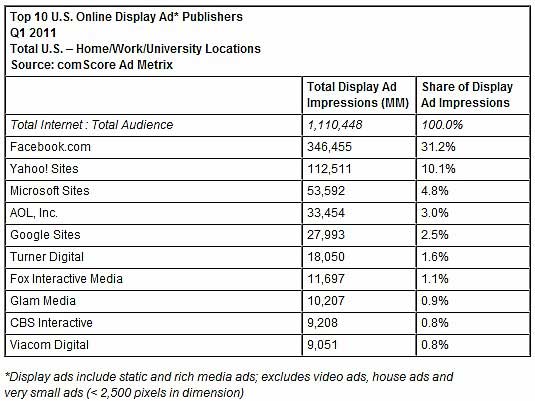
Let’s face it: Facebook has done a masterful job of flipping the social networking script on rival MySpace over the past three years. Holding nearly sixty percent of all social network traffic in the United States, Facebook has become the undisputed heavyweight of social technology. Twitter remains the media darling, but has proven difficult to quantify from a traffic standpoint (those of us who use the service regularly have noticed a sharp drop-off in quality content, and rumors abound of a plateau in the near future).

The public recently received an interesting bit of data from the folks over at Facebook: “The Gross National Happiness Index”. Compiling the data was a relatively simple process: the Facebook team conducted a search for recurring words or phrases in status updates and attached indicators.

The moral of the story?

Intellectual property content uploaded to Facebook – even content blocked using privacy filters – is licensed by Facebook. Images, videos, and private messages are all categorized and indexed in massive databases freely searchable by the Facebook team, and presumably available for sale to advertisers.

From the Facebook Terms of Service:

“For content that is covered by intellectual property rights you specifically give us the following permission, subject to your privacy and application settings: you grant us a non-exclusive, transferable, sub-licensable, royalty-free, worldwide license to use any IP content that you post on or in connection with Facebook ("IP License"). This IP License ends when you delete your IP content or your account unless your content has been shared with others, and they have not deleted it.”

Keep this in mind as advertisers and revenue streams for social networks become more sophisticated. As an advertiser, I would gladly pay Facebook a tidy sum to tell me at a microsegmentation level the behaviors and preferences of my target consumer audience.

Interact With ADMAVEN on Twitter

PEOPLE WHO READ THIS ARTICLE ALSO READ:

> FTC Regulates Bloggers: How to Comply

> ADMAVEN's 5 Minute Music Survey: Consumption Habits and More

> Innovation In Music: New Opportunities For Advertisers From MPL Music Publishing Part 3

Friday, October 9, 2009

FTC Regulates Bloggers: How To Comply

Social Media Ethics Briefing -- presented by Andy Sernovitz live from BlogWell from GasPedal on Vimeo.


Interact With ADMAVEN on Twitter

PEOPLE WHO READ THIS ARTICLE ALSO READ:

> ADMAVEN's 5 Minute Music Survey: Consumption Habits and More

> Innovation In Music: New Opportunities For Advertisers From MPL Music Publishing Part 3

> The Economist Brings You Another "Shift Happens"

Wednesday, October 7, 2009

ADMAVEN's 5 Minute Music Survey: Consumption Habits and More

In light of recent articles covering changes in the music industry and integration of social technologies I have constructed a brief poll to ask you some simple questions about how you consume music.

I will publish the results of the poll at the end of the week - it only takes 5 minutes so please participate; the more responses we collect the more valuable insights we will have to share!

>> Click Here to take survey (opens in new window)


Interact With ADMAVEN on Twitter

PEOPLE WHO READ THIS ARTICLE ALSO READ:

> Innovation In Music: New Opportunities For Advertisers From MPL Music Publishing Part 3

> The Economist Brings You Another "Shift Happens"

> Innovation In Music: New Opportunities For Advertisers From MPL Music Publishing Part 2